
Homepage › Where does it hurt? › Head
Head
Cranial Zone and Associated Structures
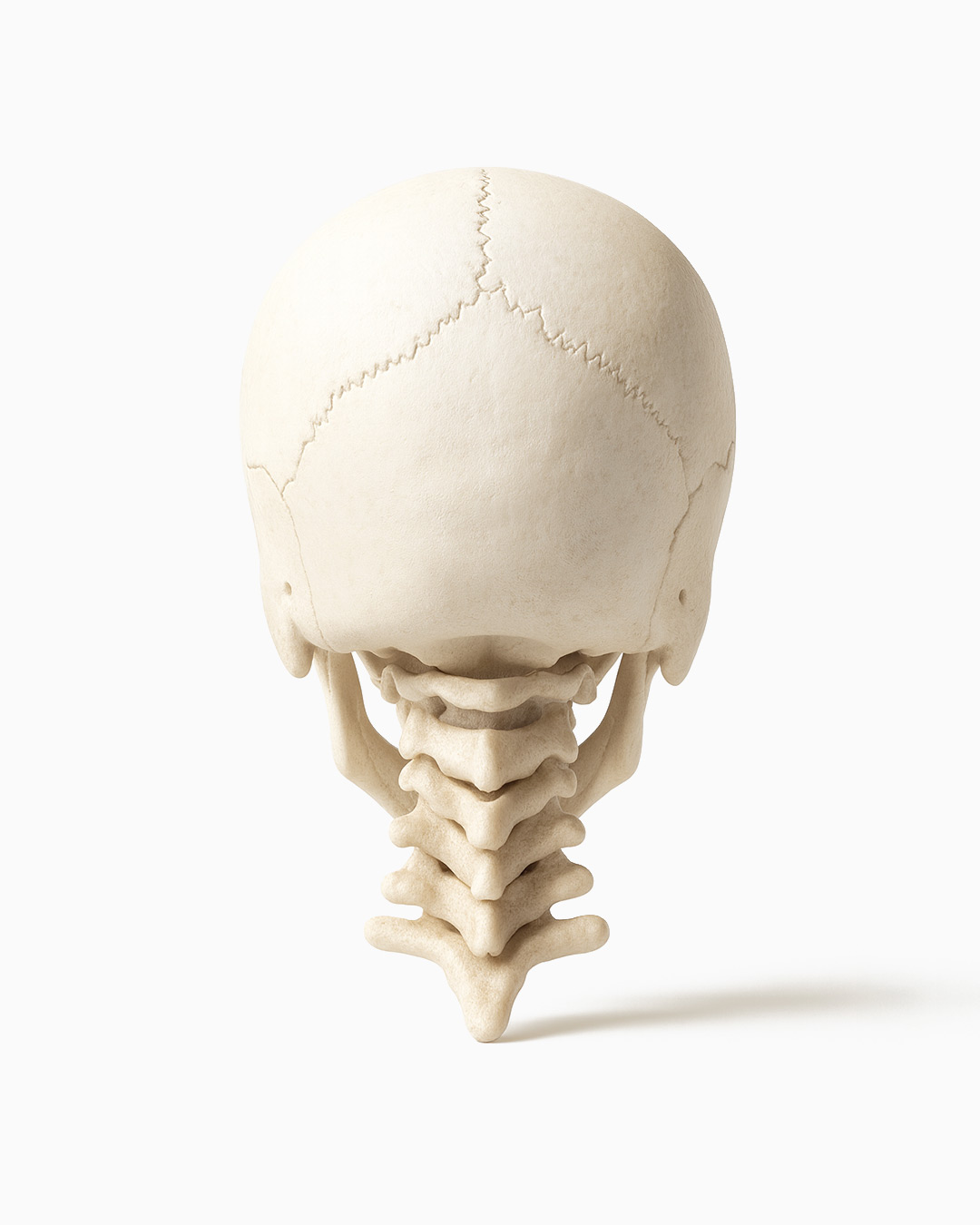
Headaches of cervical origin, known as cervicogenic headaches, are often accompanied by a feeling of pressure in the back of the neck and temples. These headaches frequently arise after prolonged periods in incorrect postures or repetitive neck movements. In some cases, dizziness may also occur, associated with cervical tension.
Zone
Cervical
Lumbar
Dorsal
Cervical osteoarthritis results from wear and tear of the joints in the cervical spine, causing pain, stiffness, and limited movement.
Zone
Cervical
Lumbar
Dorsal
Spinal stenosis refers to the narrowing of the spinal canal, compressing nerves and causing pain or motor changes.
Zone
Cervical
Lumbar
Dorsal
Vertebral fractures typically occur due to trauma or osteoporosis, causing pain and limited mobility.
Zone
Cervical
Lumbar
Dorsal
A herniated disc occurs when the intervertebral disc ruptures, compressing nerves or the spinal cord.
Zone
Cervical
Lumbar
Dorsal
Muscle tension occurs due to prolonged contractions, often linked to stress or poor posture. Although it can sometimes also be associated with spinal problems.
Zone
Cervical
Lumbar
Dorsal
Radiofrequency ablation is a minimally invasive treatment indicated in some cases of chronic neck pain.
Zone
Cervical
Lumbar
Dorsal
Arthrodesis is a surgical procedure that joins two or more vertebrae, providing stability in cases of severe pain or instability of the spine.
Zone
Cervical
Lumbar
Dorsal
Treatments for vertebral fractures involve bone cementation to stabilize the spine. Kyphoplasty allows for height restoration; vertebroplasty only provides stabilization.
Zone
Cervical
Lumbar
Dorsal
A technique that allows for the decompression of compressed nerves through small incisions and less invasive procedures, focusing on rapid recovery and minimal impact on surrounding tissues.
Zone
Cervical
Lumbar
Dorsal
Minimally invasive surgery uses modern techniques that reduce damage to tissues, allowing for faster recovery.
Zone
Cervical
Lumbar
Dorsal
Complementary therapies include physiotherapy, injections, and postural exercises, which are important in relieving pain and improving posture.